
What determines edge quality on a stamped part
A good cut edge means a minimal burr and a controlled bright band. Both come down to punch-to-die clearance and tool condition.
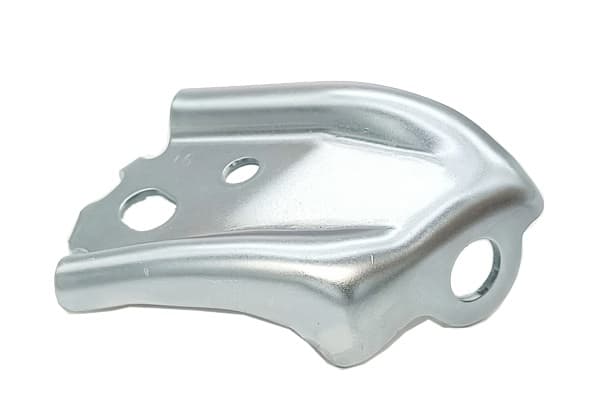
The cut face of a stamped part is not a clean shear all the way through. It has four distinct zones: a rollover where the punch first deflects the material, a bright burnished band where the punch actually shears it, a rougher fracture zone where the material finally tears, and a burr on the exit side.
The first priority is controlling the burr and keeping it as small as possible, because a burr causes handling injuries, interferes with assembly, and can break off and contaminate a mechanism. The second is the bright band. Customers with precision requirements often specify what proportion of the total edge must be burnished, and meeting a high figure moves the job into genuine precision stamping territory.
Both are governed mainly by punch-to-die clearance relative to material thickness. Too little clearance and the tool wears rapidly and secondary shear appears; too much and the rollover and burr grow while the bright band shrinks. Tool condition matters just as much: a punch that has lost its sharp edge produces a large burr even with perfect clearance.
Our practice is to set clearance for the specific material and thickness rather than using one nominal figure, and to regrind on a scheduled interval based on hit count. Waiting for a burr complaint from the customer means a batch has already shipped.